
Bone grafting and sinus lift cost: what adds to your implant bill
By Kai Quinn · Updated 2026-07-03
If your provider has told you that you need a bone graft or sinus lift before an implant can go in, you’re not alone, it’s one of the most common add-ons to implant treatment plans. It’s also one of the least predictable in terms of cost, because “grafting” covers a wide range of procedures depending on how much bone is missing. Here’s how to think about the price for bone grafting and sinus lift work in Chicago.
Why the range is so wide
A minor graft to fill a single extraction socket is a different procedure, and a different bill, than rebuilding an entire section of a resorbed ridge. The graft material itself varies too: your own bone (harvested from elsewhere in your mouth or jaw) costs more because it requires a second surgical site, while donor bone or synthetic material is often less expensive but may take slightly longer to fully integrate. Sedation, if used, is typically a separate line item on top of the graft itself.
| Procedure | Typical Chicago cost |
|---|---|
| Minor socket graft (single site) | $300 - $800 |
| Larger ridge or block graft | $800 - $2,500+ |
| Sinus lift | $1,500 - $3,000+ |
| Graft using your own bone (autograft) | Often the higher end of these ranges |
What a sinus lift actually is, and why it costs more
A sinus lift is a specific type of graft used when an upper back implant site sits close to the sinus cavity, which is common once the sinus has expanded downward after long-term tooth loss. The surgeon gently lifts the sinus membrane and packs bone material underneath it, which is a more involved procedure than a standard graft and explains the higher price. Not everyone needs one; it depends on how much bone remains between your jaw ridge and the sinus floor, something only a 3D scan can measure accurately.

Why timing changes the total bill
Grafting and implant placement don’t always happen in the same visit. If your case needs significant bone rebuilding, the graft has to heal, often for three to six months, before the implant can go in safely, which means the surgical fees show up as two separate charges spread across your treatment timeline rather than one combined number. Ask upfront whether your provider plans to graft and place the implant simultaneously or in stages, since that affects both your total cost and how long the whole process takes from first visit to final crown.
How to know if you actually need it
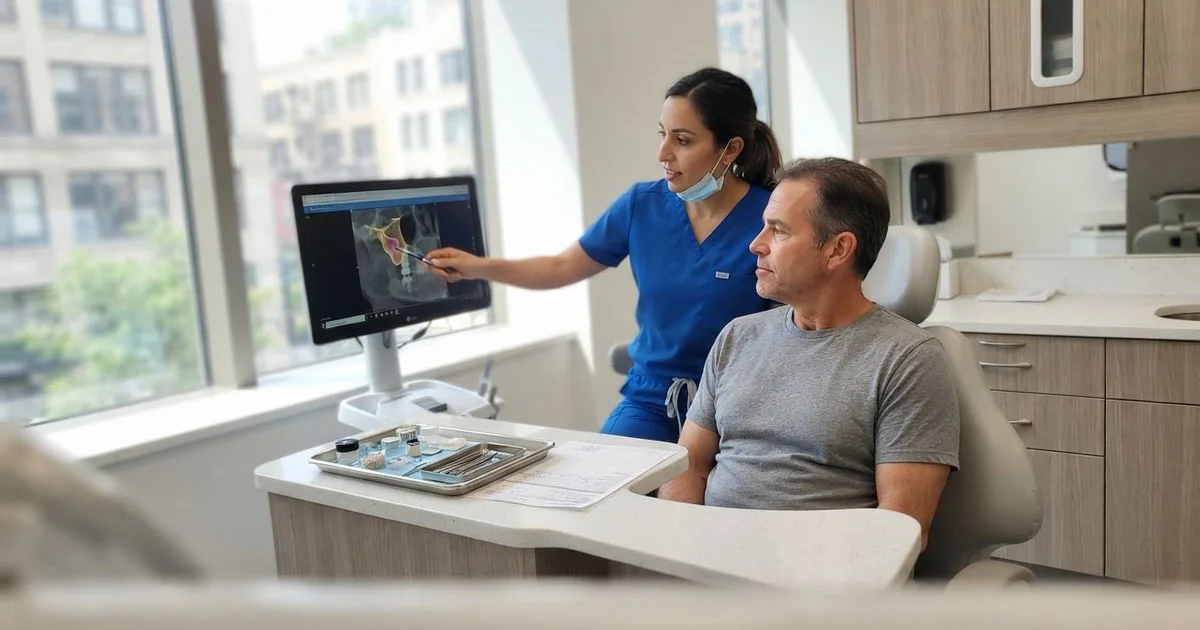
The only reliable way to confirm whether grafting is necessary is a cone beam CT scan, which shows bone height, width, and density in three dimensions. A flat panoramic X-ray isn’t detailed enough to make this call accurately. If a provider recommends grafting without showing you the actual scan and explaining the measurements, it’s reasonable to ask to see it yourself or get a second opinion before agreeing to the added cost.
What happens if the graft doesn’t take
In a small percentage of cases, a bone graft doesn’t integrate the way it should, sometimes due to infection, insufficient blood supply to the area, or the graft material shifting before it fully sets. If this happens, the site typically needs to heal fully before a second graft attempt, which adds both time and cost. Ask upfront how your provider handles this scenario, including whether a follow-up graft would be billed again in full or partially covered under their original treatment plan, since policies here vary by practice.
Getting a fair quote
Ask specifically what type of graft material is being used and why, whether the cost includes a follow-up scan to confirm the graft has healed before implant placement, and what happens if additional grafting is needed partway through. Providers who explain their case volume with grafting specifically, not just implants in general, tend to give more consistent outcomes.
This is general cost information, not medical advice. Whether you need grafting, and how much it will cost, depends on your own imaging and treatment plan. Our methodology covers how we score providers on surgical transparency and patient feedback, and the Chicago, IL Dental Implants Provider Guide can help you compare options before booking a consultation.
FAQ
- How much does a bone graft cost before a dental implant?
- A small, localized graft for a single implant site often runs $300 to $800. Larger ridge grafts or grafts using bone harvested from your own jaw or hip cost more because of the added surgical work.
- How much more does a sinus lift add?
- Sinus lifts are a bigger procedure than a routine graft and commonly run $1,500 to $3,000 or more, depending on the graft material and whether sedation is used.
- Will insurance cover any of this?
- Some medical or dental plans cover a portion of grafting when it's classified as medically necessary, but coverage varies widely. Ask your provider's office to check your specific plan before treatment.
- Can I skip grafting and go straight to the implant?
- Only if imaging shows you have enough bone height, width, and density to support the implant safely. Skipping a needed graft raises the risk of implant failure, so this isn't a corner worth cutting on your own judgment.