
Sedation for implant surgery: what's safe and what to ask before you agree
By Kai Quinn · Updated 2026-07-09
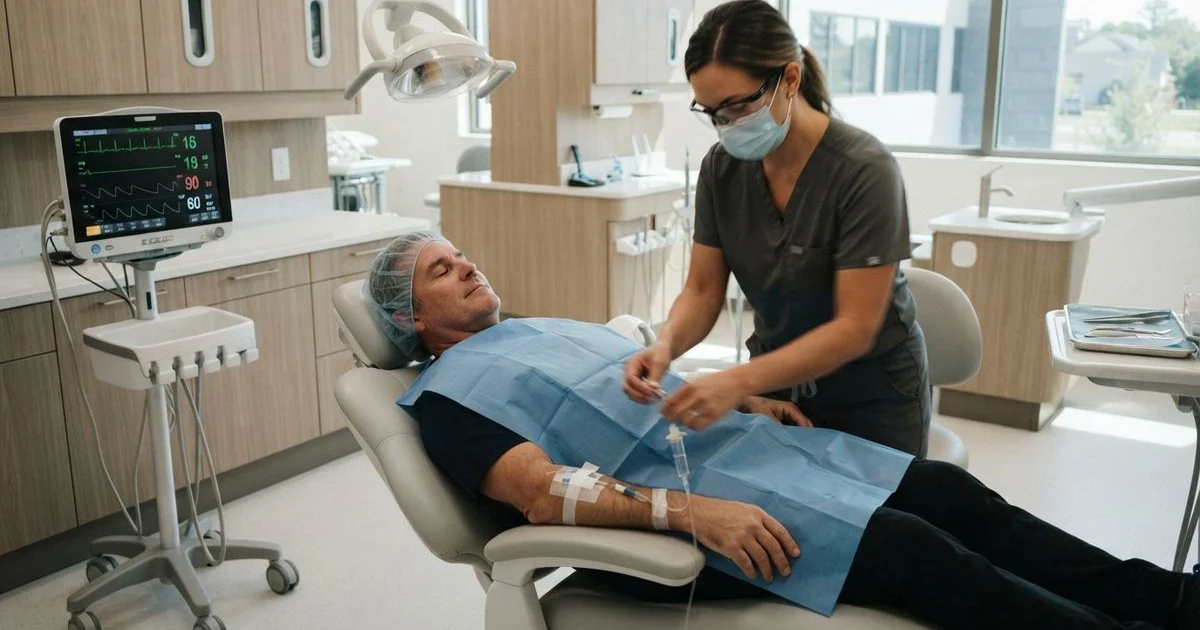
Sedation choices for implant surgery range from nothing beyond local numbing to full general anesthesia, and the right level depends on the procedure’s complexity and your own anxiety level, not just personal preference. Here’s how to think through the safety side before you agree to a plan with a sedation dentistry for implant surgery provider in Chicago.
The sedation levels, in order of depth
Local anesthesia numbs only the surgical site and is used in nearly every implant procedure regardless of what else is added on top. Nitrous oxide (laughing gas) adds a light, quickly-reversible relaxation and wears off within minutes of removing the mask. Oral conscious sedation uses a pill taken before the appointment and leaves you drowsy but responsive, requiring a driver. IV sedation is administered through a vein, allows for deeper and more controllable sedation, and also requires monitoring and a driver. General anesthesia puts you fully unconscious and is typically reserved for extensive surgical cases or patients who can’t tolerate any level of consciousness during treatment.
| Sedation level | Awareness during procedure | Driver needed after |
|---|---|---|
| Local anesthesia only | Fully awake, area numbed | No |
| Nitrous oxide | Awake, relaxed | Usually no |
| Oral conscious sedation | Drowsy, responsive | Yes |
| IV sedation | Deeply relaxed, may not remember procedure | Yes |
| General anesthesia | Fully unconscious | Yes |
What actually makes sedation safe
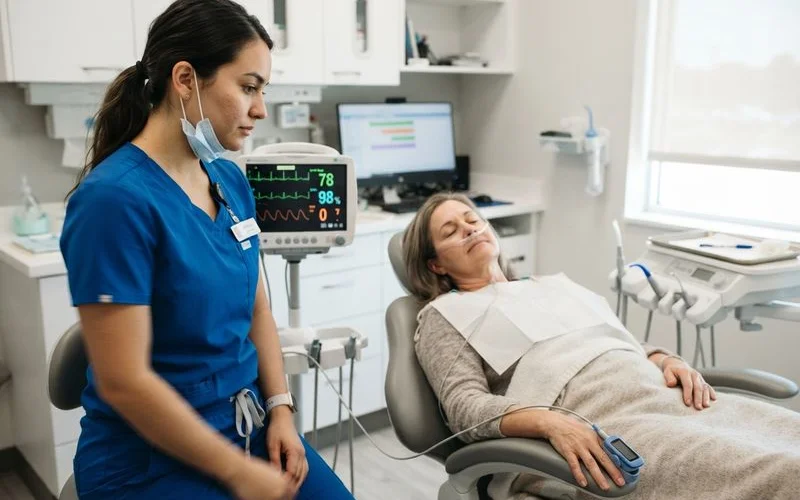
The biggest safety factor isn’t the sedation level itself, it’s whether the provider properly screens your medical history and monitors your vitals throughout the procedure. Ask whether the person administering sedation is the dentist, a certified anesthesiologist, or another trained team member, and what monitoring equipment is used during the procedure. A provider offering IV sedation or general anesthesia should have emergency protocols and equipment on hand, not just a willingness to sedate.
Who should be extra cautious
Certain heart conditions, uncontrolled high blood pressure, sleep apnea, and some respiratory conditions raise the risk profile for deeper sedation. Being upfront about your full medical history, including medications and past reactions to anesthesia, is essential before any sedation is administered. If a provider doesn’t ask detailed health questions before recommending a sedation level, that’s worth flagging.
Why anxiety alone can justify a deeper sedation choice
Not every reason for choosing sedation is about procedure length or complexity. Significant dental anxiety is itself a legitimate reason to choose oral or IV sedation even for a relatively simple implant, since a patient who’s tense or fearful throughout a procedure can make it harder for the provider to work precisely and can make the experience genuinely traumatic for the patient. There’s no need to justify wanting a calmer experience; providers who specialize in anxious patients generally build sedation options into their standard approach rather than treating it as an unusual request.
Fasting and pre-procedure instructions
Any sedation beyond local anesthesia or nitrous oxide typically comes with fasting requirements, often no food or drink for several hours before your appointment, to reduce the risk of complications during sedation. Your provider should give you written instructions well ahead of the appointment, covering fasting, medication adjustments, and what to arrange for a ride home. Following these instructions precisely matters more than people often realize; showing up having eaten when you shouldn’t have can mean your appointment gets rescheduled entirely.
Matching sedation to the actual procedure
A single, simple implant rarely needs more than local anesthesia or nitrous oxide. Longer procedures like All-on-4 surgery or cases involving significant anxiety more commonly use oral or IV sedation. It’s reasonable to ask your provider why they’re recommending a particular level for your specific case rather than defaulting to whatever their practice offers most often.
This is general information, not medical advice specific to your health history. Whether a given sedation level is appropriate for you depends on a proper pre-procedure evaluation with your provider. Our methodology explains how we evaluate providers on safety practices and patient feedback, and the Chicago, IL Dental Implants Provider Guide can help you compare sedation options across local practices.
FAQ
- Do I need sedation for a dental implant, or is local anesthesia enough?
- For a single, straightforward implant, local anesthesia alone is often enough. Sedation is more commonly used for longer procedures, multiple implants, or patients with significant dental anxiety.
- Is IV sedation for a dental implant dangerous?
- IV sedation is generally safe when administered by a trained provider who monitors your vitals throughout, but it carries more risk than lighter sedation options and requires a proper pre-procedure health screening.
- Who should avoid deeper sedation like IV or general anesthesia?
- People with certain heart, lung, or airway conditions may need extra precautions or should avoid deeper sedation. Always disclose your full medical history before choosing a sedation level.
- Can I drive myself home after sedation?
- Not after oral conscious sedation, IV sedation, or general anesthesia. You'll need someone to drive you and ideally stay with you for the rest of the day. Local anesthesia and nitrous oxide typically wear off quickly enough to drive yourself.