
Is dental implant surgery safe? Risks, complications, and how they're handled
By Kai Quinn · Updated 2026-07-06
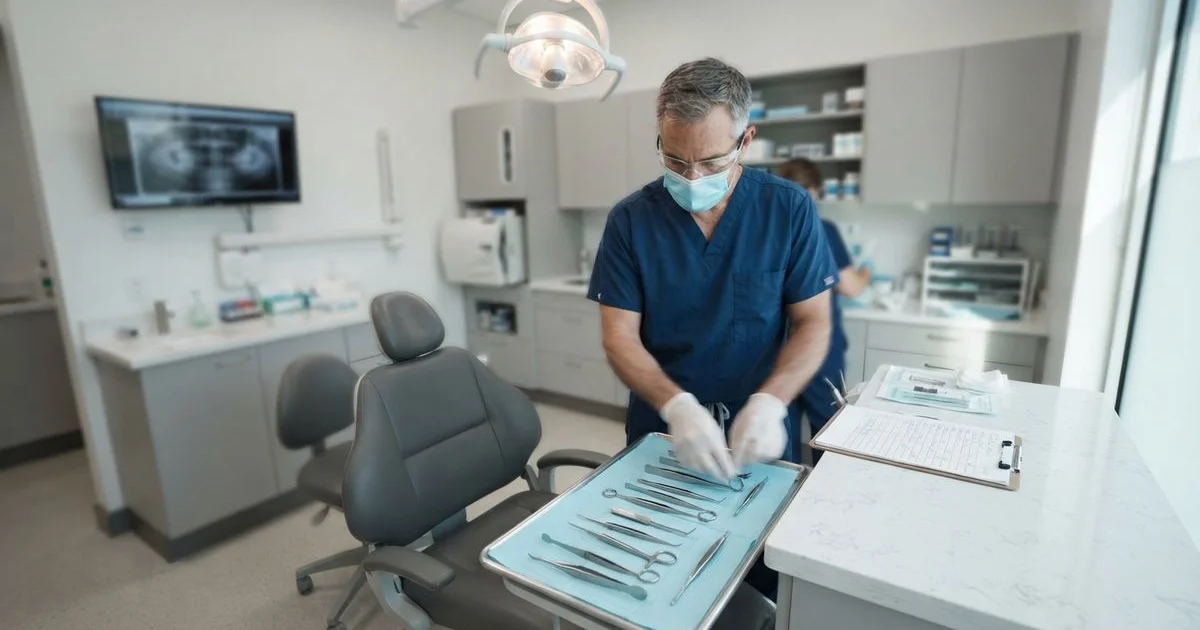
Any surgery carries risk, and it’s reasonable to want a straight answer before committing to implant treatment rather than reassurance alone. The good news is that dental implants have a long track record and generally favorable outcomes, but knowing what can go wrong, and how often, helps you ask better questions at a consultation.
How common complications actually are
Most studies and long-term data on healthy patients report implant success rates in the 90 to 95 percent range, meaning the implant fuses properly and functions well for years. That leaves a meaningful minority where something doesn’t go as planned, whether that’s a minor issue resolved with treatment or, less often, implant failure requiring removal and a second attempt. Rates tend to be lower in smokers, people with uncontrolled diabetes, and cases involving compromised bone, which is part of why providers screen for these factors before recommending surgery.
The main risks, explained plainly
Infection at the surgical site is the most common early complication, usually caught and treated with antibiotics if it’s identified quickly. Osseointegration failure, where the implant doesn’t properly fuse to the bone, happens in a smaller percentage of cases and is more likely with certain health conditions or if the implant is loaded with a crown too soon. Nerve irritation or numbness, particularly in lower jaw implants placed near the mandibular nerve, is less common but more serious, which is why accurate 3D imaging before surgery matters. Sinus complications can occur with upper back implants placed too close to the sinus cavity.
| Risk | How common | How it’s typically handled |
|---|---|---|
| Surgical site infection | Relatively common, usually minor | Antibiotics, monitoring |
| Osseointegration (fusion) failure | Uncommon in healthy patients | Implant removal, healing, retry |
| Nerve irritation or numbness | Uncommon | Often temporary; rarely permanent with careful planning |
| Sinus complications | Uncommon | Managed medically or surgically depending on severity |
| Peri-implantitis (gum infection around implant) | Can develop years later | Deep cleaning, sometimes surgical treatment |
Recognizing early warning signs yourself
Beyond what your provider monitors, it helps to know your own warning signs. Pain or swelling that worsens rather than improves after the first two or three days, a fever, or an implant that feels loose to the touch are all reasons to call your provider promptly rather than waiting for a scheduled follow-up. Catching a developing infection or integration problem early generally means a simpler fix than letting it progress.
What lowers your personal risk
The single biggest factor within your control is who does the planning. A provider using a 3D cone beam CT scan to map bone, nerves, and sinus position before surgery catches problems a flat X-ray would miss. Good oral hygiene and regular checkups after the implant heals also matter, since peri-implantitis, an infection around an otherwise successful implant, can develop years later if plaque builds up around the site the same way it would around a natural tooth.
Long-term risk versus surgical risk
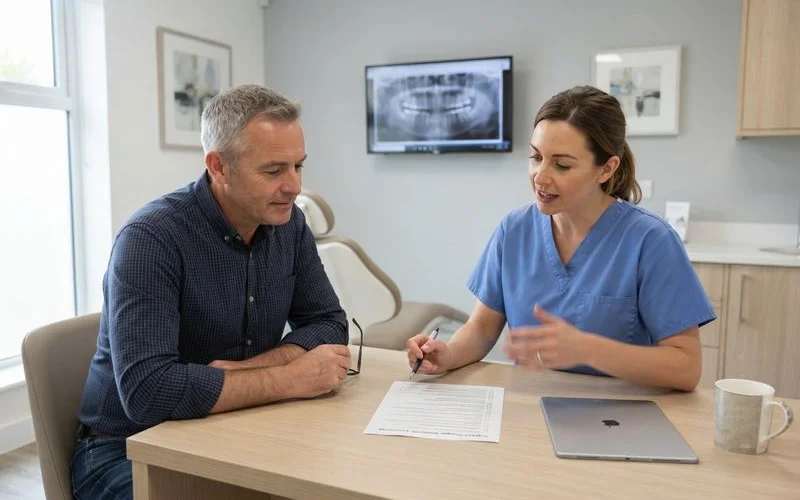
It’s worth separating two different timeframes of risk. Surgical risk is what happens during and immediately after the procedure: bleeding, infection, or a reaction to anesthesia. Long-term risk is different and centers mostly on peri-implantitis, which can develop years after a perfectly successful surgery if plaque and bacteria build up around the implant the same way they would around a natural tooth. This is why implants aren’t a one-time fix you can forget about; regular cleanings and checkups matter just as much after the fact as the surgical planning did before it.
Questions worth asking before you agree to surgery
Ask what percentage of the surgeon’s own cases have needed a redo, not just the general published statistics. Ask what their protocol is if an implant fails to integrate. Ask whether they use 3D imaging as standard practice or only for complex cases. A provider who answers these plainly, rather than deflecting to “it’s very safe,” is generally the better sign.
This is general health information and not a substitute for a medical evaluation. Your own risk profile depends on your health history, bone condition, and the specific procedure planned, all of which your provider should walk through directly. Our methodology explains how we score providers on training and transparency, and the Chicago, IL Dental Implants Provider Guide can help you compare options before booking a consultation.
FAQ
- What's the success rate for dental implants?
- Long-term success rates are generally reported in the 90 to 95 percent range for healthy patients with adequate bone, though rates vary by jaw location and individual health factors.
- What are the most common complications?
- Infection at the surgical site, implant failure to fuse with the bone (called osseointegration failure), and nerve irritation are the main ones. Most are treatable if caught early, which is why follow-up visits matter.
- How painful is the procedure and recovery?
- The surgery itself is done under anesthesia or sedation, so you shouldn't feel it happening. Afterward, most people describe soreness and swelling comparable to a tooth extraction, manageable with prescribed medication.
- What symptoms after surgery mean I should call my dentist?
- Fever, pain that gets worse instead of better after the first few days, pus or a bad taste at the site, or an implant that feels loose are all reasons to call rather than wait it out.